


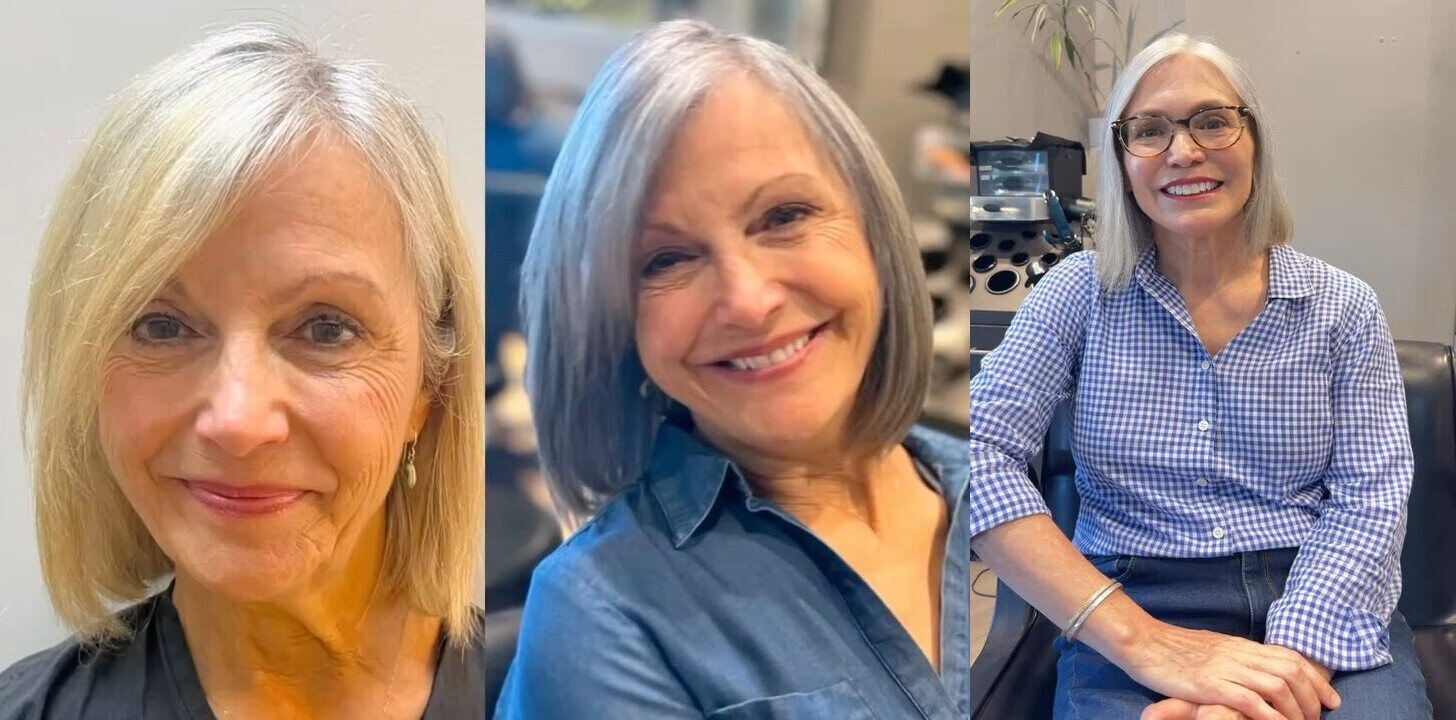
Gray hair does not have to mean a standing appointment to hide it. Some people want it covered completely, some want it softened and blended, and some are ready to let their natural silver take center stage. All three can look polished and intentional when the color and the cut are planned together. Behnaz recently shared a before and after transformation on Instagram that moves a warm blonde bob to a soft silver one, a good example of how much a change of tone can do.
If you are weighing your options, this guide explains the three main approaches, what each one involves day to day, and how to choose.
Three Ways to Handle Gray Hair
- Cover it: full gray coverage with a single color for a uniform, seamless result.
- Blend it: highlights, lowlights or a soft gloss that mix your gray into the rest of your color so regrowth is far less noticeable.
- Go silver: grow in or lighten to your natural gray or a cool silver tone, with a cut that makes the most of it.
Gray Coverage
Gray hair can be more resistant to color than the rest of your hair, so the formula and processing time are adjusted to get full coverage. As your natural shade grows in, a root touch-up matches your existing color so the regrowth blends in seamlessly. Plan on a touch-up every 4 to 6 weeks for full gray coverage or a strong contrast between your natural and colored shade, and about two hours for a typical appointment. See more about hair color and gray coverage.
Gray Blending
Blending is the softer path. Fine highlights add light, and lowlights add depth where the gray shows most, so the line between your natural color and your gray all but disappears. The result grows out gracefully, which usually means longer stretches between visits. It is also a popular first step for anyone who would like to move toward silver over time.
Going Silver
Gray is not one shade. Natural silver can run from steel and pewter to bright white, and many people have a mix of tones in the same head of hair. Going silver can mean growing out your color and shaping the transition, or lightening and toning your hair to a deliberate cool silver. Where you start makes a big difference, whether that is dark color, blonde, or a mix of both, so the plan is worked out in person. Some changes happen in one visit, and others are gradual.
Silver also looks different depending on what surrounds it. A clean, glossy finish and a well-shaped cut are what make it look luxe rather than neglected.
Why the Cut Matters Even More With Gray
Gray and silver hair show every line of a haircut. Shine, shape and healthy ends are what make the color look rich, so a precise cut matters more, not less. Behnaz trained at the Vidal Sassoon Academies, where haircuts are built from clean, controlled sections and exact angles. A sleek bob, a soft layered shape or a short pixie can each be right for silver, depending on your face and hair type. See her precision haircuts, or read the bob haircut guide and pixie cut guide.
Caring for Gray and Silver Hair
- Moisture: gray hair often feels drier or coarser, so hydration and a weekly mask routine help keep it soft. See healthy hair habits.
- Tone: silver and blonde tones can turn yellow or brassy over time. Ask Behnaz which products suit your color and how often to use them.
- Shine: a gloss between color visits refreshes tone and adds reflection.
- Trims: regular trims keep the shape crisp and the ends healthy.
Which Option Is Right for You?
- Do you want your gray to disappear, or to look soft and natural?
- How often are you willing to come in for upkeep?
- Is your hair now dark, blonde, or already partly silver?
- Are you open to a new cut with your new color?
There is no wrong answer, and you can always change direction later.
Ready to Talk About Your Gray?
Bring photos of looks you love, and any you do not, to your appointment. Every service with Behnaz includes a free consultation, so you can talk through your options before any color is mixed. See more of her work on Instagram, and book your appointment at Salon Bravissimo in Sacramento.