


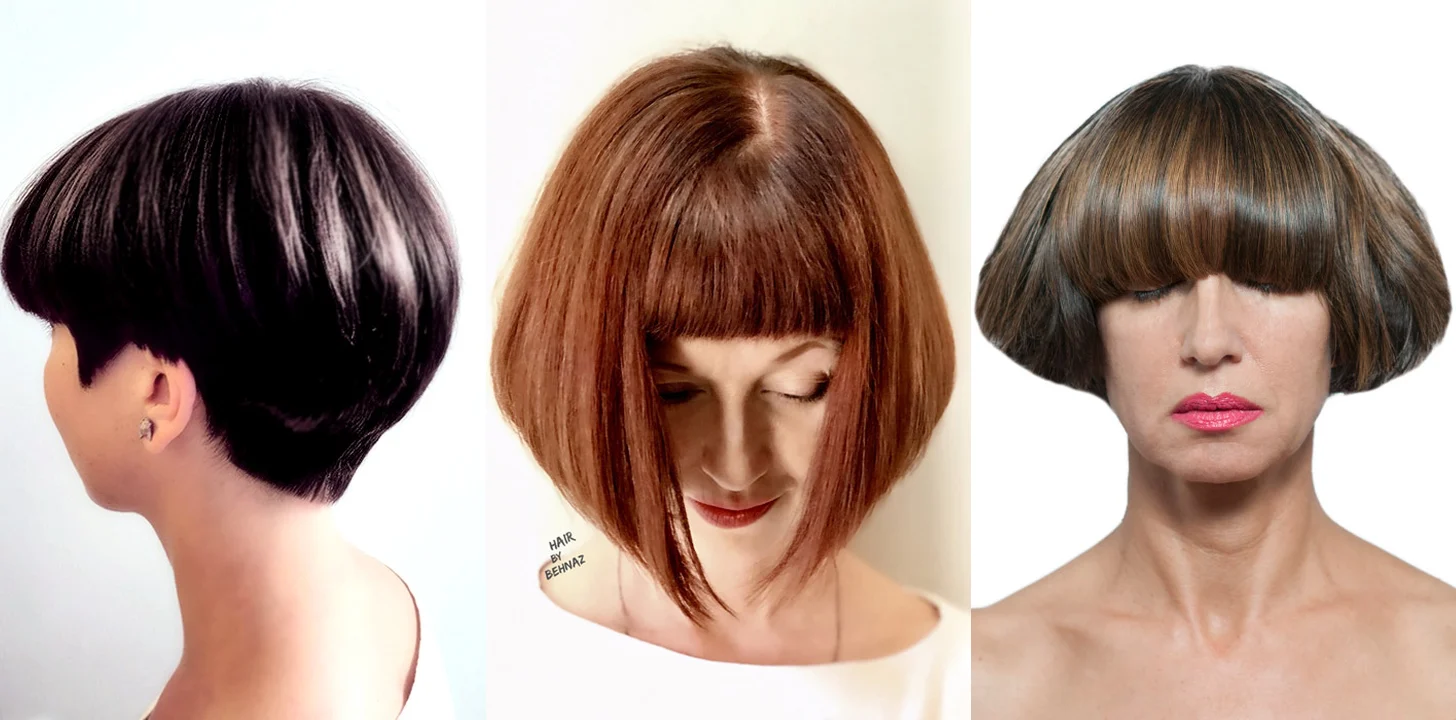
If you have ever left a salon with a cut that looked perfect for a week and then fell apart, you have met the opposite of a precision haircut. A precision cut is built to hold its shape. It falls into place on its own, and it grows out evenly. It is the foundation of Behnaz’s work as a Vidal Sassoon–trained master stylist in Sacramento, and it is the reason her clients keep coming back for bobs, pixies and short cuts.
This guide explains what a precision haircut is, where the method comes from, what being Sassoon-trained means for you in the chair, and what to expect at your appointment.
What Is a Precision Haircut?
A precision haircut is a cut where the shape is designed and built into the hair, instead of being created afterward with heat, product and daily effort. The hair is cut in clean, controlled sections at exact angles, so every line has a purpose. The result is a cut that sits correctly with very little styling.
You can usually tell a precision cut by how it behaves:
- It falls into place. After washing and a quick dry, the hair finds its shape instead of needing to be forced into it.
- The lines are clean. The perimeter, the nape and the fringe look intentional from every angle, including the back.
- It grows out evenly. Instead of going shapeless, the cut softens gradually, so you are not in a hurry to rescue it.
- It suits you. The shape is planned around your hair type, your growth patterns and your face, not copied from a photo.
Where the Method Comes From
The precision approach is closely tied to Vidal Sassoon, the British hairdresser who opened his first salon in London in 1954. Sassoon wanted to strip away everything unnecessary and focus on the basic angles of the cut and the shape. In 1964 he reinvented the classic bob as a short, angular cut with clean lines, and in 1968 he created the pixie cut that Mia Farrow wore, which became one of the most famous haircuts of its era.
The idea behind it was simple but radical at the time: cut the hair, do not style it. Instead of setting hair in place with rollers and lacquer, the haircut itself does the work. Hair that is cut well can be washed, dried and shaken into shape. That thinking still shapes how many stylists approach short hair today.
What Does Sassoon-Trained Mean?
Behnaz trained at the Vidal Sassoon Academies, and she has been cutting hair for 39 years, since 1987. In practice, that training shows up in a few habits:
- Sectioning first. The hair is divided into clean sections so each part of the cut is controlled and consistent.
- Exact angles. The way the hair is held and cut determines where weight sits and how the shape curves, so it is done on purpose.
- The cut comes first. A good shape needs less styling, which means a cut that is easier to live with.
- Checking the balance. The hair is checked from the front, the sides and the back, so the finished cut looks right from every angle.
If you are searching for a Vidal Sassoon stylist in Sacramento, Behnaz is one.
Cuts Where Precision Matters Most
Precision is useful in every haircut, but it is easiest to see, and matters most, in short and structured shapes where there is nowhere for a mistake to hide.
- Bobs. A bob lives or dies by its line. A blunt, A-line or graduated bob needs a crisp perimeter and a nape that looks intentional. See the full guide to bob haircuts in Sacramento.
- Pixies and short cuts. Short hair shows every angle, and the shape has to work around the ears, the nape and the crown. Read Is a Pixie Cut Right for You?
- Bangs and fringes. Micro bangs, blunt fringes and long side-swept bangs all depend on exact cutting to sit properly.
- Asian hair. Straight, dense hair shows a clean line beautifully, which makes a precision cut an especially good fit. Behnaz specializes in cutting Korean, Japanese and Chinese hair. See her guide to a Korean or Asian hair salon in Sacramento.
- Curly and wavy hair. Precision does not mean flat or stiff. Curls are cut with the curl pattern and shrinkage in mind, so the shape sits in balance.
- Long hair. Even long layers benefit from a planned shape, so the ends look fresh and the movement is even.
Precision Cut or Regular Haircut: What Is the Difference?
Most haircuts remove length. A precision cut also decides where the weight goes, how the hair moves and how the shape ages over the next two months. The difference tends to show up after you leave the salon:
- Styling time. A cut that is built well needs less work each morning.
- Grow-out. The shape softens evenly rather than losing its line in a week or two.
- Consistency. You can wash it, air dry it and still like how it looks.
What to Expect at Your Appointment
- A free consultation. Every service with Behnaz includes one. You talk through what you want, your routine, and what has and has not worked before. Bring photos of cuts you love and ones you do not.
- A plan for your hair. She looks at your hair type, density, growth patterns and face shape, and explains the shape she recommends before cutting.
- The cut. The hair is sectioned and cut with care, then checked from every side.
- Finishing and styling advice. You leave knowing how to style it at home, and when to come back.
How Often Should You Get a Precision Cut Trimmed?
Short shapes lose their line quickly, so most bobs and pixies look best with a trim every 4 to 8 weeks. Longer hair can usually go 8 to 12 weeks between visits. Keeping up with trims is what keeps a precision cut looking precise. If you decide to grow it out, a well-cut shape grows out gracefully. See how to grow out a pixie or bob.
Precision Cutting and Color
A clean cut is the best canvas for color, because the eye follows the line of the haircut. Copper, burgundy, platinum and soft dimensional tones all look sharper against a well-built shape. Explore Behnaz’s hair color, highlights and balayage services.
Frequently Asked Questions
What is a Sassoon precision cut?
It is a haircut built from clean, controlled sections at exact angles, so the shape is designed into the cut. It falls into place and grows out evenly.
Is a precision haircut only for short hair?
No. Precision shows most in bobs, pixies and short cuts, but long layers, curly cuts and men’s cuts all benefit from the same planning.
Will a precision cut take a lot of styling?
Usually less than other cuts. The point of the method is that the haircut does the work, so most people can wash, dry and go, with a little product or a quick blow-dry for polish.
Do you offer a free consultation?
Yes. Every service with Behnaz includes a free consultation before any cutting begins.
Where is Behnaz located?
Behnaz works at Salon Bravissimo, 2358 Fair Oaks Blvd, Sacramento. She welcomes clients from East Sacramento, Arden-Arcade, Carmichael, Fair Oaks and nearby neighborhoods.
Book a Precision Haircut in Sacramento
If you want a cut that looks right on the day and still looks right weeks later, a precision haircut is worth trying. See more about Behnaz’s precision haircuts, then book your appointment at Salon Bravissimo in Sacramento. Your first consultation is free.